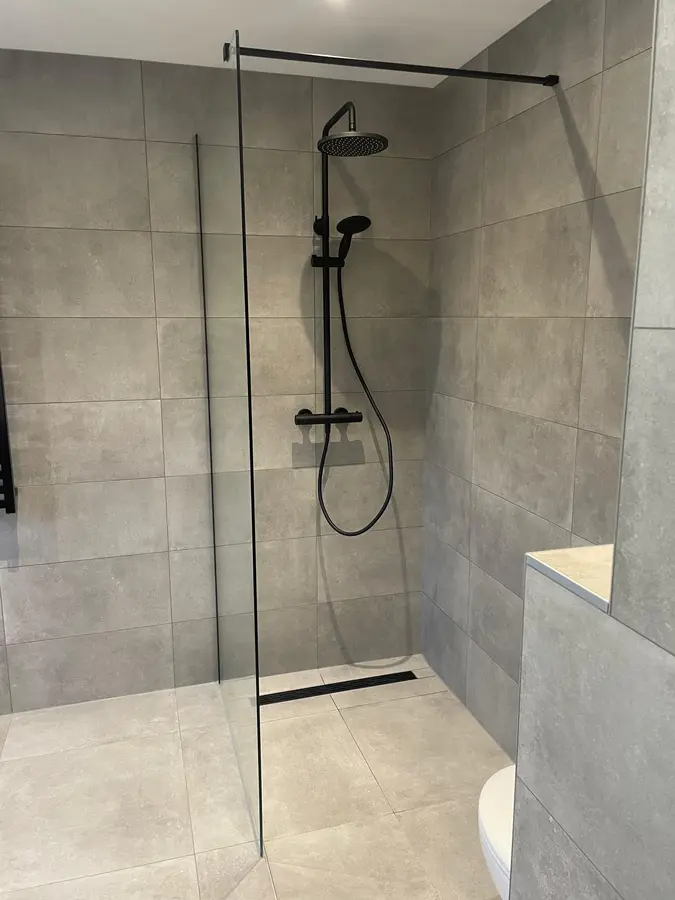
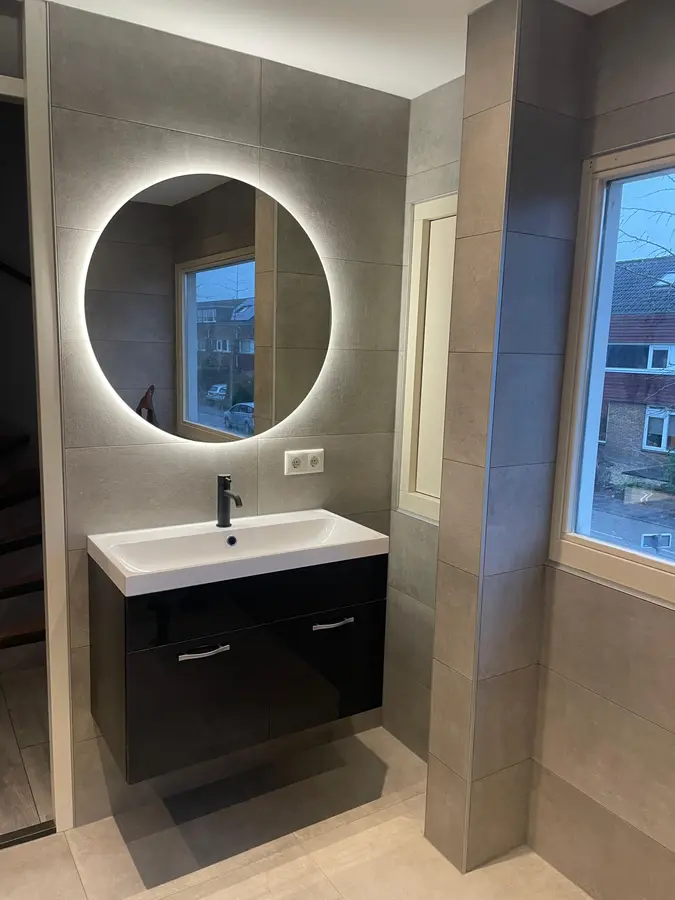
Bathroom regrouting new grout without new tiles
Are the grout lines in your shower black, porous or crumbling? Send photos via WhatsApp for a tailored quote.
Rated on Google · Price in advance · Guarantee on the work
Tiles last for decades, grout often doesn't. After years of showering it becomes dark, porous and crumbly, and then the grout absorbs water instead of keeping it out. Regrouting gives your bathroom a fresh look and helps prevent leaks, without removing a single tile. But it must be done properly: old grout out, not over the top.
Short answer
Regrouting means: grinding or scraping out the old grout to a depth of a few millimetres, making it dust-free, applying new grout mortar and replacing the sealant joints in the corners and around sanitaryware. This is worthwhile if the tiles themselves are secure and intact. If tiles are loose or sound hollow, that must be addressed first. The price depends on the number of square metres and the grout width; you will hear this upfront.
- A thin layer over the old grout won't hold.
- Epoxy grout is denser and more stain-resistant, but more difficult to apply than cement grout.
- Corners and joints should be sealed, not grouted.
Call me back
Leave your name and number and we'll call you. Prefer immediate contact? Call 070 783 0224 or message us.
When should you have regrouting done?
- Grout that stays dark, even after thorough cleaning with a grout cleaner.
- Crumbling or worn grout, which you can scratch with a fingernail or which has holes in it.
- Grout that stays wet for a long time after showering: the grout is absorbing water.
- Cracks along the tiles or between wall and floor. Those corners need sealant, not grout.
- A musty smell or damp patches on the other side of the wall.
If we find during raking out that water is already behind the tiles, or tiles are loose, we will tell you immediately. Regrouting over a damp or loose surface is money wasted.
How we regrout a bathroom
- Protection. Drain, bath, shower tray and taps are masked off. Raking out creates dust; we work with extraction where possible.
- Remove old grout. Grind or scrape out until there is enough depth for new grout that adheres properly, without damaging the tile edges.
- Dust-free and slightly damp (for cement grout) or dry (for epoxy), according to the product instructions.
- New grouting. Grout mortar deep into the joint, then washed off with a sponge so the tiles stay clean.
- Sealing. After curing, the corners and connections to bath, shower tray and washbasin are done. See bathroom sealant work.
Cement grout or epoxy grout?
Cement-based grout is the standard grout in most bathrooms. It is easy to work with, available in many colours and easy to repair later. Disadvantage: it remains slightly porous and absorbs dirt and soap residue.
Epoxy grout is denser and more stain-resistant, making it easier to keep clean in a shower. However, it is more difficult to apply and more expensive in material, and incorrectly applied epoxy grout leaves a haze on the tiles. Not every tile is suitable; we advise against it for some natural stone.
Which it will be, we discuss beforehand. In a frequently used walk-in shower, many customers choose epoxy on the floor and cement grout on the wall; that's a good middle ground.
What does regrouting a bathroom cost?
Regrouting is not listed as a fixed price in our tariff list. The work depends on the number of m², the tile size (small tiles = much more metres of grout) and the choice of cement or epoxy.
Send us photos of the walls and floor and provide the approximate dimensions and tile size. You'll receive a tailored quote, including replacement of the sealant joints. If tiles need replacing, we'll include that in the same quote; see tile replacement.
| Item | Excl. VAT | Incl. 21% VAT |
|---|---|---|
| Call-out charge: first 30 minutes + diagnosis | € 100 – € 165 | € 121 – € 199,65 |
| Call-out charge | € 35 | € 42,35 |
If a job is not listed in the price list, you will receive a tailored quote after photos or a short visit. For that visit, the call-out charge is € 100 – € 165 excl. VAT (€ 121 – € 199.65 incl.) for the first half hour including diagnosis, plus travel costs of € 35 excl. VAT (€ 42.35 incl.). You will always hear the price before we start.
Questions about re-grouting
Can I grout over the old grout?
No. A thin layer of new grout on top of the old adheres poorly and will crumble again quickly. The old grout must be removed to a depth of a few millimetres.
How long does re-grouting take?
For an average shower it is often finished within a day, including sealant work. Afterwards the grout must cure; how long you must wait before showering is stated on the product and we will tell you at the end.
Is epoxy grout better than cement grout?
Epoxy is denser and more stain-resistant, which is pleasant in a shower. However, it is more expensive and harder to work with, and not suitable for every tile. We advise on a case-by-case basis.
Why is my grout turning black?
Due to moisture, soap residue and mould penetrating the porous grout. Good ventilation and wiping down the walls after showering help. If the grout is crumbling, only replacement will help.
What does regrouting a bathroom cost?
That depends on m², tile size and grout type. After photos and measurements you will receive a tailored price, including sealant work.
Do the corners also need to be grouted?
No. Sealant belongs in the corners and at joints with the bath, shower tray and washbasin, because there is movement there. Grout will crack there.