Toilet leaking — how to find where the water is coming from
A puddle beside the bowl, a wet floor behind the toilet or a damp patch in the ceiling below. A leaking toilet is often discovered late. Yet the cause is usually easy to find. We locate the leak, replace the faulty part and make sure everything stays dry again.
Is your toilet leaking?
Call or message us — a photo of the wet spot already helps us a lot.
Call 070 783 0224 Message via WhatsApp Request a call-back ★★★★★ Rated on Google · 24/7 for emergenciesFour places where a toilet can leak
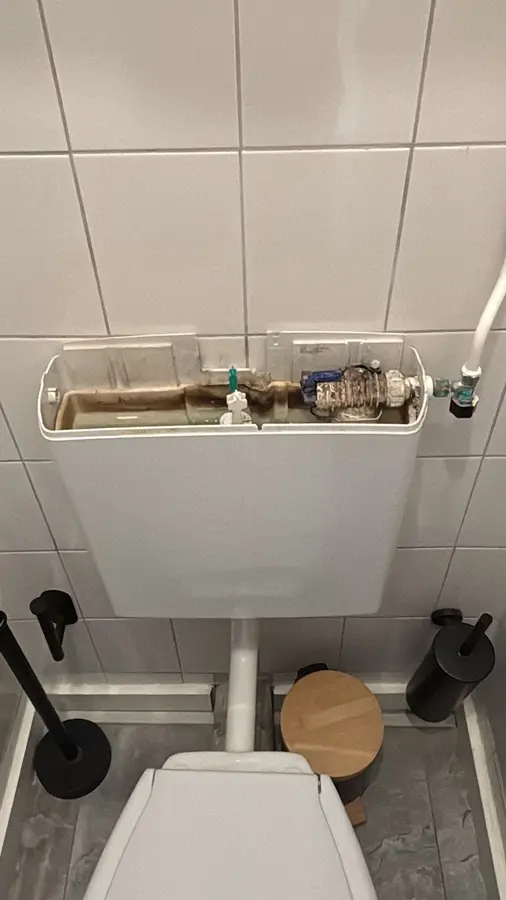
The supply water enters the cistern via a shut-off valve and a flexible hose. When flushing, the flush water runs to the pan, and then everything goes via the drain to the sewer. At each connection there is a rubber seal, ring or coupling. These harden over the years, crack or come loose.
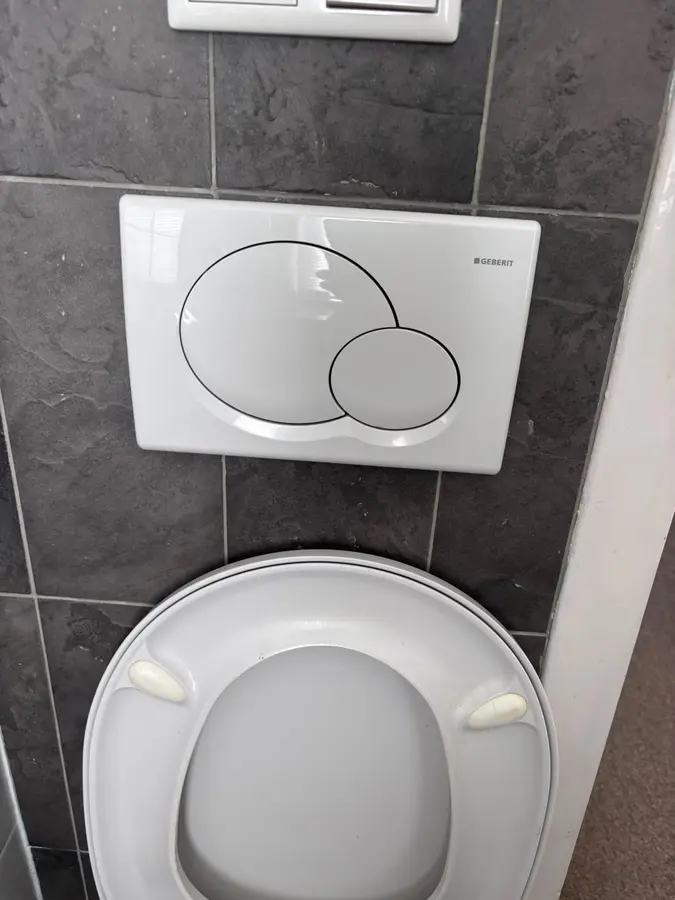
With a wall-hung toilet, the cistern and drain are behind the wall. A leak there is often only visible when water comes out from under the bowl, or when a stain appears in the ceiling below. Does the WC only keep running into the bowl? Then it's not a leak to the outside; read toilet keeps running.
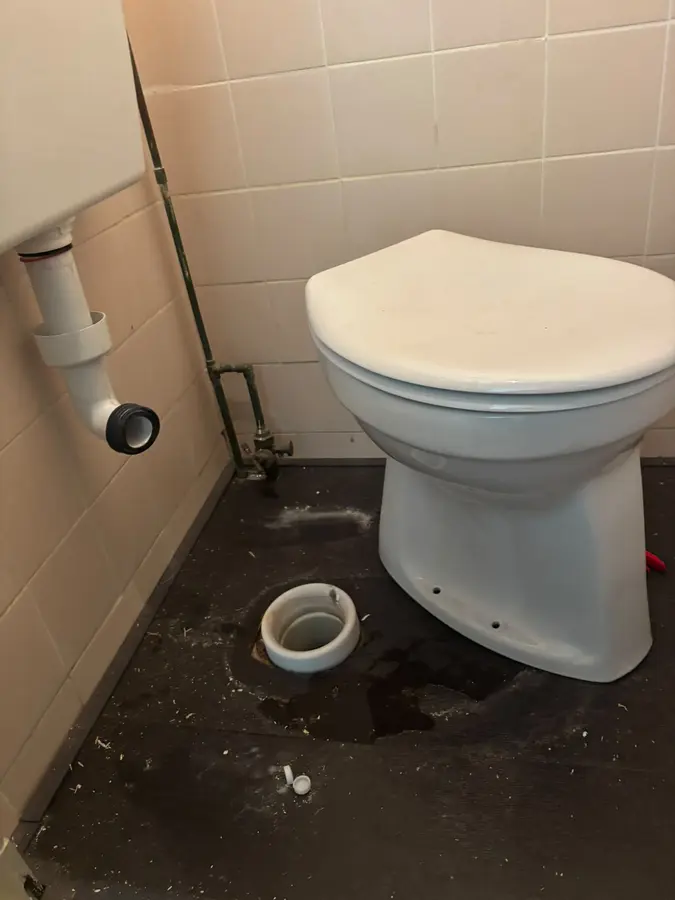
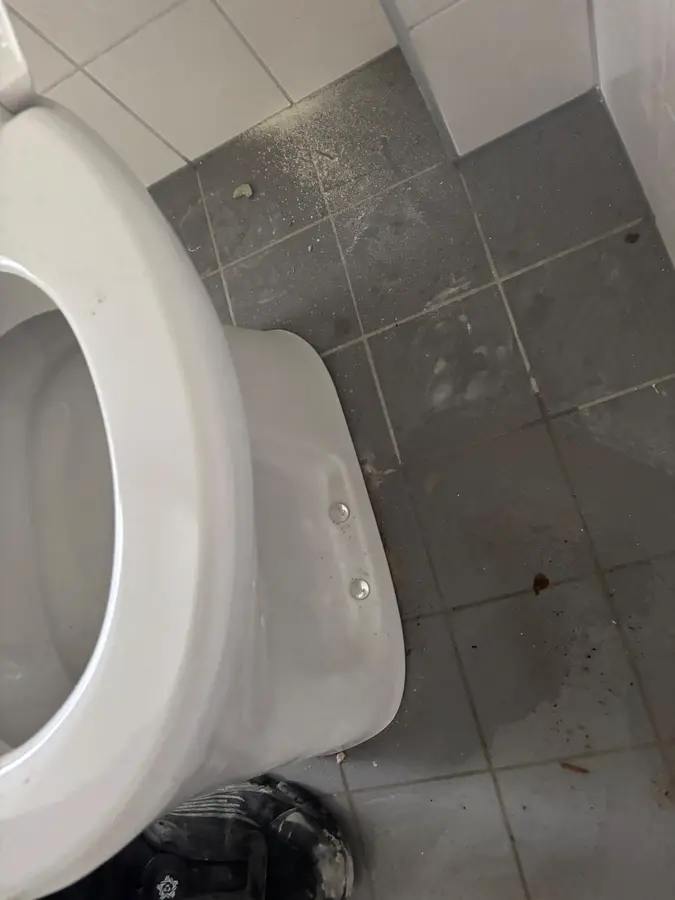
- Bottom of the pan — the outlet connector or the seal to the waste pipe.
- Between cistern and bowl — the sealing ring or the flush pipe, also called the drop pipe.
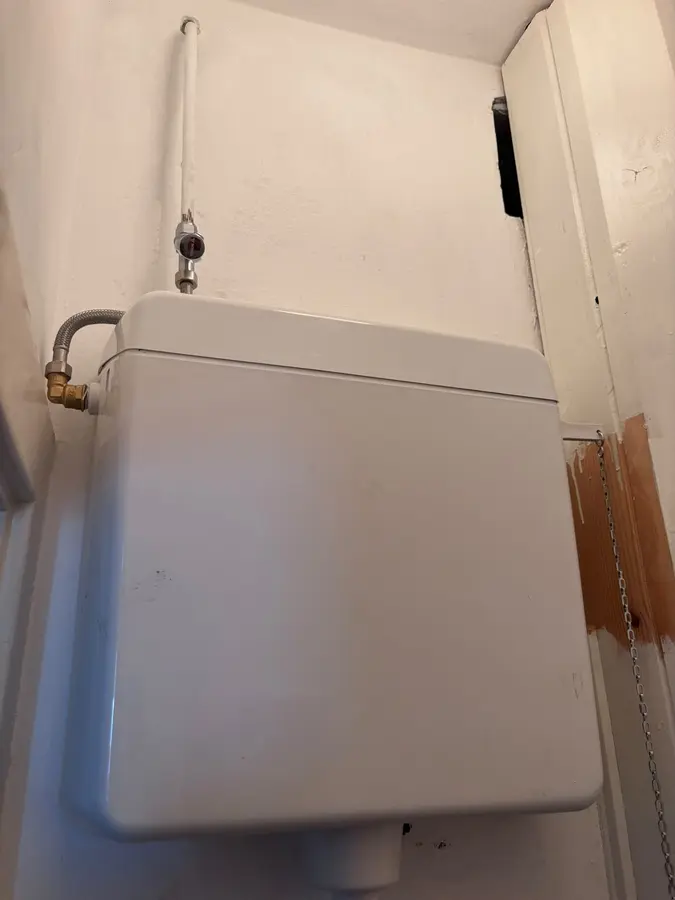
- Isolation valve and hose — the couplings or a flexible hose that's leaking.
- Behind the wall — the concealed cistern or the connections of a wall-hung toilet.

Leaking toilet repaired
We only replace what's leaking, and then check whether the rest of the connections are still sound.
Replace waste connector
If it's leaking at the bottom of the pan, we replace the connector or seal to the drain and secure the pan firmly again.
Call 070 783 0224Cistern connection
If it leaks between cistern and bowl, or at the flush pipe, we replace the seal or the flush pipe connector.
Call 070 783 0224Hose and isolation valve
A leaking flexible hose or a stop valve that won't close properly – we replace it straight away.
More about bathroom fixturesWall-hung toilet and concealed cistern
We access the connections behind the wall via the flush plate or by removing the toilet, and seal the leak there.
Call 070 783 0224Can't find the leak?
Is the floor wet but we see no drip at the toilet? Then we search further with leak detection, without unnecessary breaking.
More about leak detectionHow to find where the leak is
With a few simple tests you can often find the spot yourself:
- Dry everything — dry the bowl, cistern, pipes and floor thoroughly. Otherwise you won't know which water is new.
- Tissue test — hold a piece of toilet paper against each connection. Where it gets wet, that's where the leak is.
- Only when flushing? — then it's in the flush pipe, the seal between cistern and bowl, or the waste connector.
- Even without flushing? — then it's on the supply side: isolation valve, hose or couplings.
- Dye in the cistern — put some food colouring in and don't flush. Coloured water on the floor indicates a leak between cistern and pan.
Please note: a cistern can 'sweat' in summer. Cold water in the cistern causes condensation on the outside, which drips down. If the whole cistern is wet and not just one spot, it's usually condensation.
Why you shouldn't ignore a small leak
A toilet that leaks a little leaks every day. The water seeps into the joints and the floor. A wooden floor can start to rot, and on an upper floor the water will sooner or later come through the ceiling below: a brown ring directly under the toilet.
The sooner you tackle it, the smaller the repair. Take photos for your insurance before anything is repaired. Read more about leaking drains in recognising drain leaks, and about a stain on the ceiling in damp patch on the ceiling.
A dry floor again in 4 steps
A fixed price in advance, and we prefer to complete the job in one visit.
You call or message
Tell us where it's wet and whether it only leaks when flushing. A photo helps.
Price in advance
You'll hear in advance what the repair will cost.
Locate and seal leak
We locate the spot, replace the part and secure the bowl or cistern properly again.
Testing
We flush a few times and check that all connections remain dry.
Limit damage until we arrive
These steps will prevent the damage from getting worse.
- Turn off the isolation valve — the valve is next to or under the cistern; with a wall-hung toilet often behind the flush plate. Don't flush the toilet afterwards.
- Is the tap itself leaking? — then turn off the stopcock. Where it is, you can read in stopcock and outside tap.
- Tighten the coupling slightly — if a nut on the hose is dripping, carefully tighten it a little. Not too hard: a plastic coupling can then crack.
- Don't seal over it with sealant — a layer of sealant only blocks the leak. The water will then run invisibly under the toilet into the floor.
When should you call us?
- Immediately (24/7) — water is flowing from the hose or tap and won't stop, or water is dripping through the ceiling below.
- Today — there's a puddle next to the toilet after every flush, or a wall-hung toilet is leaking underneath.
- This week — you occasionally see a damp edge at the base of the bowl or by the cistern.
Not sure? Call 070 783 0224 — we'll help you think it through, no obligation.
Is your toilet leaking? We can help you.
Fixed price upfront · often same day · 24/7 for emergencies · ★★★★★ Rated on Google
Useful reading
Explained by our tradesmen.
Recognising and stopping drain leaks
Read more →Toilet keeps running? Causes and solution
Read more →Bathroom leak
Read more →Water damage and insurance
Read more →Also useful: Bathroom fixtures & taps · Toilet keeps running · Unblock toilet · Leak Repair · Water Damage & Restoration
Frequently asked questions about a leaking toilet
My toilet is leaking at the bottom. What's the cause?
Usually the connector or seal between the bowl and the waste is worn or loose. If it only leaks when flushing, that's almost certainly it. If it also leaks without flushing, first check the hose and the isolation valve.
My toilet is leaking at the soil pipe. What should I do?
The flush pipe runs from a high-level cistern to the bowl. At the bottom is a rubber connector that hardens after years. Turn off the isolation valve and have the connector replaced.
My cistern connection is leaking. Can I fix that myself?
A dripping nut on the hose can be carefully tightened a little. If it's leaking between cistern and bowl, the cistern must come off to replace the seal. It's better to let a technician do that.
My wall-hung toilet is leaking at the bottom. How is that possible?
The connections are behind the wall. Often the waste or flush connection is leaking, or the pan is no longer firmly fixed. The concealed cistern can also leak. A technician accesses it via the flush plate or by removing the pan.
Is condensation on the cistern a leak?
No. In summer, cold water in the cistern can cause condensation on the outside. That drips down and looks like a leak. If the whole cistern is wet and not just one spot, it's usually condensation.
What does it cost to have a leaking toilet repaired?
That depends on where it's leaking and whether the connections are behind the wall. You'll hear the cost in advance: we work with a fixed price quoted upfront.