Radiator replacement, leaking or not heating — we'll fix it
A radiator that stays cold, a coupling that drips or an old radiator you want to replace: we'll sort it. You can also come to us for a new thermostat or an expansion vessel that no longer holds pressure — with a fixed price agreed in advance.
Radiator broken or cold?
Call or message us and we'll see what's needed.
Call 070 783 0224 Message via WhatsApp Request a call-back ★★★★★ Rated on Google · 24/7 for emergenciesCall me back
Leave your name and number and we'll call you. Prefer immediate contact? Call 070 783 0224 or message us.
Why a radiator stays cold
If the radiator isn't getting warm at the top, there's usually air in it. If it stays completely cold, the radiator valve or thermostatic valve may be stuck, the boiler pressure may be too low, or the hot water isn't circulating properly because the system hasn't been balanced. Sometimes a radiator is so fouled inside that it only gets half warm.
Is the radiator leaking? A drip at the coupling or valve can often be fixed with a new seal. If the leak is in the radiator itself, for example due to rust, replacement is the only real solution. Don't let a leak run: the boiler loses pressure and the floor can be damaged.
- Cold at the top — usually air: bleeding helps.
- Completely cold — valve stuck, pressure too low or not balanced.
- Drip at the coupling — replace seal.
- Rust or leak in the panel — replace radiator.

Radiators, thermostat and expansion vessel
Fitter work around your central heating system, professionally and neatly done.
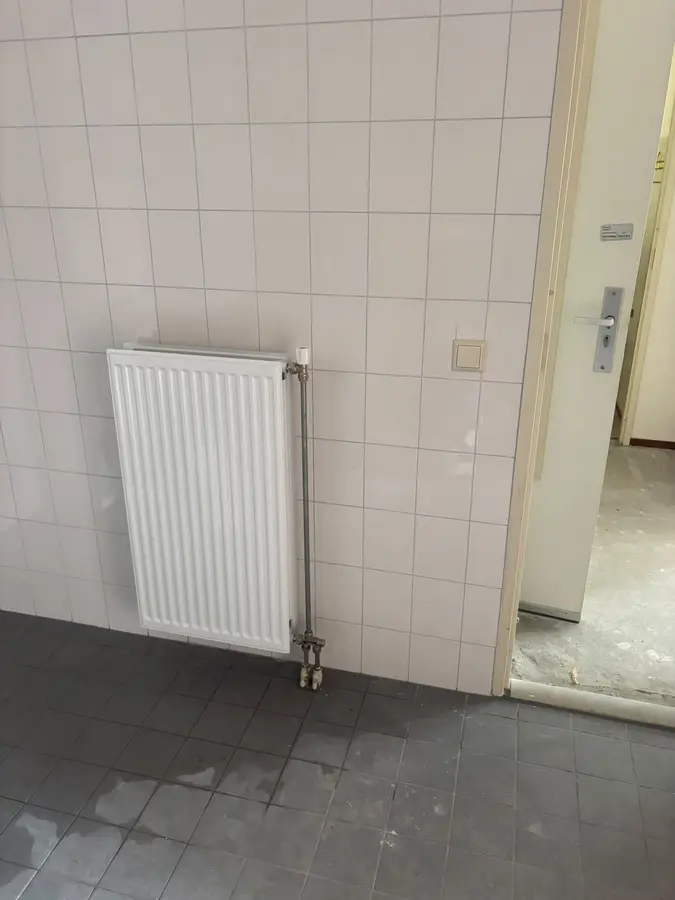
Radiator replacement
Old radiator off, new one on, connected, filled and bled. Relocation is also possible.
Call 070 783 0224Radiator not getting warm
We find the cause: air, valve, pressure or balancing — and fix it.
Call 070 783 0224Replace thermostat
A new room thermostat, connected to your boiler, with explanation of the controls.
Call 070 783 0224Expansion vessel replacement
If the pressure drops and rises sharply, or the pressure relief valve is running, we check the expansion vessel and replace it where necessary.
Call 070 783 0224Bleeding a radiator: how to do it yourself
Are your radiators ticking or gurgling, or not heating at the top? You can usually bleed them yourself. You'll need a radiator key and a cloth or container.
- Turn off the heating — turn the thermostat down and wait until the pump stops and the radiators have cooled down a little.
- Start at the bottom of the house — and work upwards. Hold the cloth under the bleed nipple at the top of the radiator.
- Turn the bleed valve a quarter turn open — you'll hear air hissing. If water comes out, close it.
- Check the boiler pressure — after bleeding, the pressure drops. When cold, most central heating systems are around 1.5 bar; top up if necessary according to the manual.
- Turn the heating back on — and after a while feel whether the radiators are getting warm everywhere.
Does a radiator stay cold after bleeding, or do you have to keep bleeding and topping up? Then there's more going on. Call us and we'll find the cause. More about pressure loss: central heating boiler losing pressure.
Warm again in 4 steps
A fixed price in advance, and we prefer to complete the job in one visit.
You call
Tell us which radiator, what you see and what the pressure on the boiler is.
Price in advance
You'll know the cost in advance.
Repair or replace
We'll fix it, top up the system and bleed it.
Inspection
We check that everything gets warm and the pressure remains stable.
If a radiator is leaking
Limit the damage until we arrive.
- Turn off the radiator valves — on both sides, if possible. This will reduce water leakage.
- Catch the water — with a bowl or towels, and protect the floor.
- Keep an eye on the boiler pressure — if it drops too far, the boiler will go into fault mode. Don't keep topping up endlessly whilst it's leaking.
- Take a photo — of the leak and the coupling. This way we'll bring the right parts.
When should you call us?
- Urgent — a radiator or pipe that's leaking badly, or no heating in freezing weather.
- Today — a dripping coupling, or radiators that stay cold after bleeding.
- By appointment — replace or relocate radiator, fit a new thermostat or expansion vessel.
Not sure? Call 070 783 0224 — we'll help you think it through, no obligation.
Radiator broken or cold? We'll help you.
Fixed price upfront · often same day · 24/7 for emergencies · ★★★★★ Rated on Google
Useful reading
Explained by our tradesmen.
Central heating boiler losing pressure
Read more →Central Heating Boiler Maintenance
Read more →Protecting pipes in winter
Read more →Also useful: Central heating boiler & breakdown · Underfloor Heating · Central Heating Boiler Maintenance · Central Heating Boiler Replacement
Frequently asked questions about radiators
Why isn't my radiator heating up?
If it's not warm at the top, there's usually air inside. If it stays completely cold, the valve may be stuck, the central heating pressure may be too low, or the system may not be properly balanced.
How do I bleed a radiator?
Turn off the heating, hold a cloth under the bleed valve and turn it a quarter turn with a radiator key until water comes out. Close it and then check the central heating pressure.
My radiator is leaking. What now?
Turn off the radiator valves on both sides, catch the water and call us. A leak at the coupling can often be fixed with a new seal; if there's rust in the panel, replacement is needed.
Can you replace or relocate a radiator?
Yes. We replace the radiator, connect it, top up the system and bleed it. You'll know the cost in advance.
When does an expansion vessel need replacing?
If the central heating pressure rises sharply during heating and then drops again, or if the pressure relief valve is discharging water. We then check the expansion vessel and replace it where necessary.