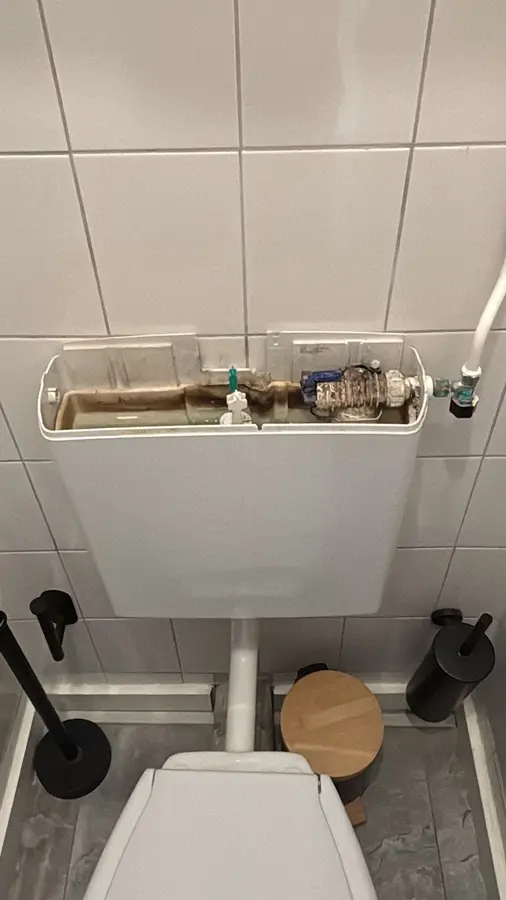
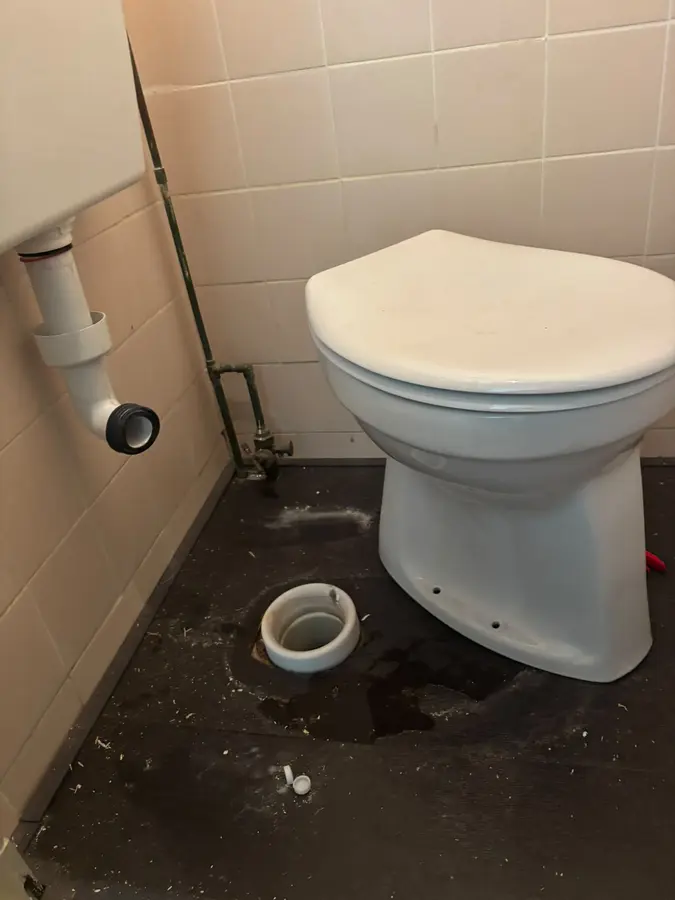
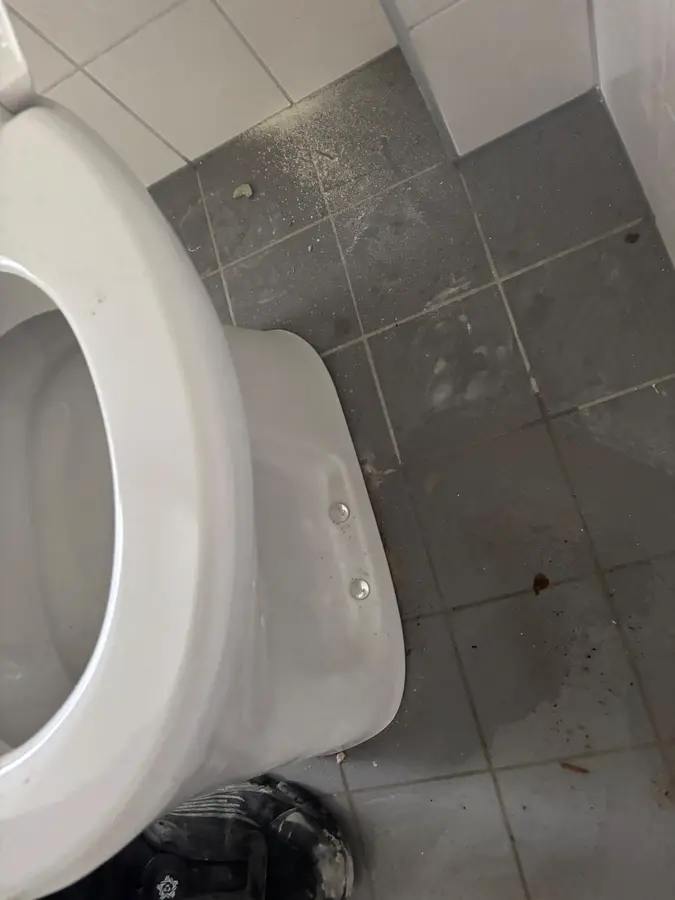
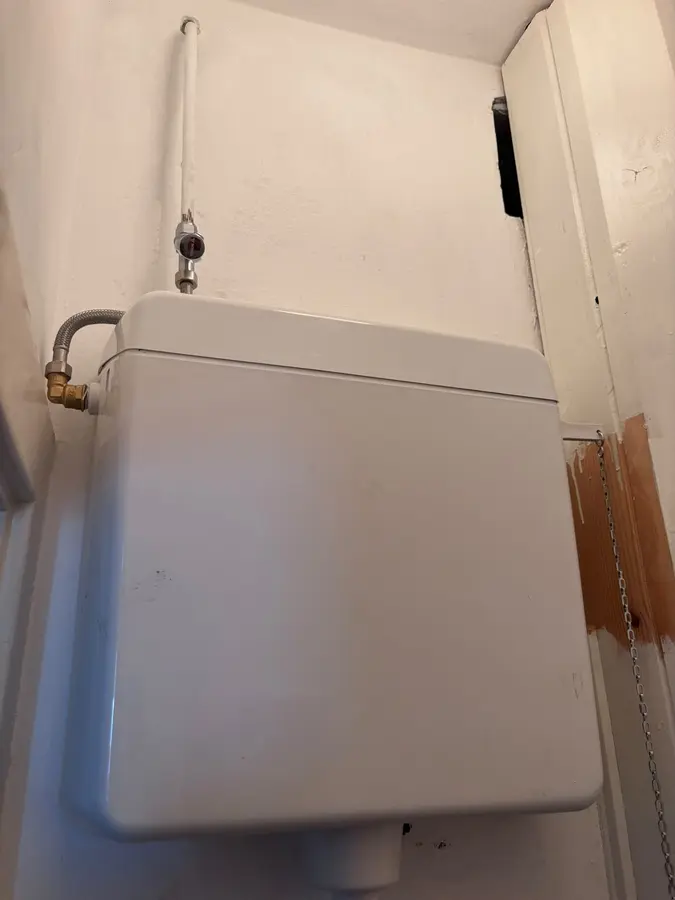
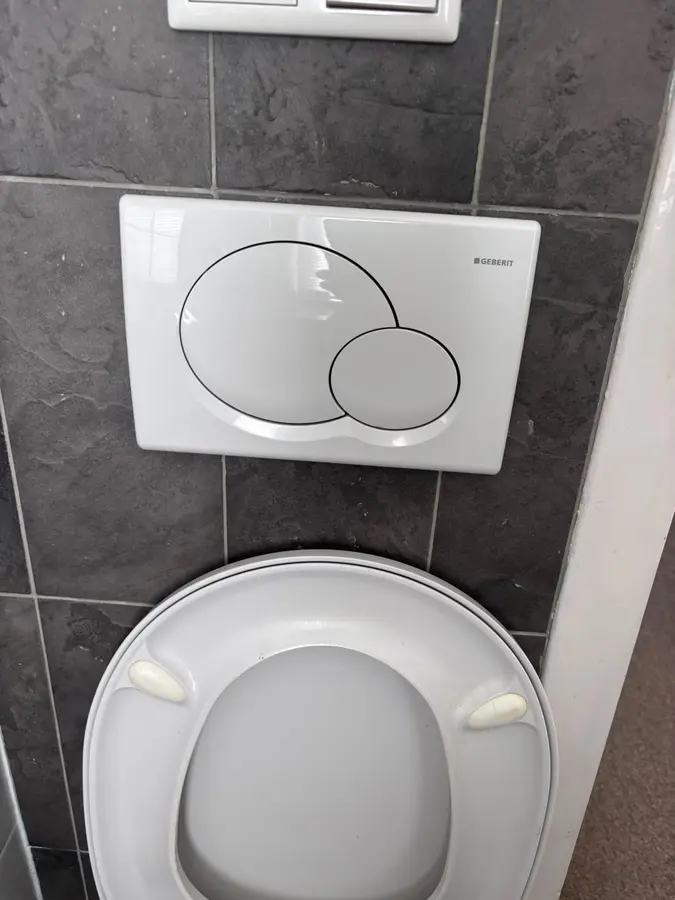
Concealed cistern leaking or running continuously usually repairable without breaking tiles
Do you hear the cistern constantly refilling, or do you see water under the wall-hung toilet? Call 070 783 0224 or send a photo of the flush plate.
Rated on Google · Price in advance · Guarantee on the work
A concealed cistern is hidden behind the wall, but is not unreachable. Behind the flush plate is an access hatch through which the fill valve, flush mechanism and shut-off valve can be removed. We solve almost every fault with a concealed cistern this way, without removing tiles. On this page you can read how to identify which part it is, what you can do yourself and when it does become serious.
Short answer
A leaking or constantly running concealed cistern is almost always a worn flush-valve seal (water runs into the bowl) or a fill valve that doesn't close properly (cistern keeps filling). We replace both via the hatch behind the flush plate, without breaking tiles. Water on the floor or in the wall is a different matter: the leak is usually at the connection to the pan or the supply, and you need to act faster.
- Continuous running in the cistern: usually the rubber seal of the flush valve.
- Constantly refilling or hissing: often the fill valve.
- Wet floor or damp in the wall: connection or leaking supply, turn off the stopcock first.
Call me back
Leave your name and number and we'll call you. Prefer immediate contact? Call 070 783 0224 or message us.
Which part is it? Three signs
A concealed cistern has only a handful of moving parts. With these signs you often know where the problem is before anyone arrives.
- A thin stream of water continuously runs into the bowl, even long after flushing. The valve (the flush valve) no longer closes properly. Limescale or a hardened rubber seal is the usual cause.
- The cistern keeps hissing or kicks in every few minutes. The fill valve doesn't close completely. That wastes water and makes an audible noise at night.
- Little or no water comes when flushing. The fill valve is closed or blocked with dirt, or the shut-off valve in the cistern is half closed.
- The push plate is loose or the button sticks. Often a rod or cam behind the plate has shifted or broken. That is a small repair.
- Water on the floor under the wall-hung toilet. That is usually not the cistern itself but the connection between bowl and cistern, the connector or the waste bend. Sometimes intermittent: it only leaks when flushing.
A simple trick to prove continuous running: place a sheet of toilet paper dry against the back wall of the bowl. If it becomes wet within a few minutes, water is running through. A few drops of food colouring in the cistern (via the hatch) show the same thing.
What you can safely do yourself
- Remove the flush plate. With most brands it clicks upwards or forwards to release. Behind it you'll see the control hatch.
- Turn off the shut-off valve in the cistern if the water keeps running or there is water on the floor. That valve is usually on the left or right in the hatch. If you cannot find it, turn off the mains stopcock.
- Take photos of the inside and of the flush plate. The plate or inside the cistern often has a type label or year. That way we bring the right part straight away.
- Limescale? A valve that keeps leaking due to a bit of limescale can sometimes be removed and cleaned by yourself. If that doesn't work or the rubber seal is hard, it's better to replace it in one go.
If in doubt, leave it closed and call us. An incorrectly refitted valve often leaks worse than before. With an old cistern (often twenty years or older), parts are not always removable; we will then first discuss the options.
How we repair a concealed cistern
- Photo or description in advance. Based on the flush plate and the inside, we look up the brand and series, so that we have the correct fill valve or correct mechanism with us.
- On-site diagnosis. We check the flush valve, fill valve, isolation valve, the mechanism behind the plate and the connection to the bowl. We also look for traces of leakage in the wall or floor.
- Replace via the hatch. Worn parts come out, new ones go in. Then we adjust the water level and the full and half flush.
- Testing. We flush several times and check that the cistern remains quiet and the floor stays dry.
If it's really leaking in the wall, at the supply or the waste bend behind the false wall, the job is bigger. We'll tell you honestly, with the options and the price, before we open anything up.
What does concealed cistern repair cost?
A small repair via the access panel is usually completed quickly. For comparison: replacing a float or fill valve is listed in our price list.
| Item | Excl. VAT | Incl. 21% VAT |
|---|---|---|
| Replacing the float valve (close-coupled cistern, for reference) | € 140 | € 169,40 |
| Call-out charge: first 30 minutes + diagnosis | € 100 – € 165 | € 121 – € 199,65 |
| Wall-hung toilet installation with false wall (replacement) | € 1.265 | € 1.530,65 |
Guide prices from the PandFix price list (October 2026). Call-out charge is additional: €35 excl. VAT (€42.35 incl.), emergency €65 excl. VAT (€78.65 incl.). Evening or weekend: surcharge €80 excl. VAT (€96.80 incl.). Materials and extra hours only by agreement. You will always hear the price before we start. Parts for a concealed cistern (fill valve, flush mechanism, push plate) vary by brand and series; you will hear that price in advance.
If the cistern is so old that parts are no longer available, or there's a leak behind the wall, replacement becomes an option. For that, read wall-hung toilet installation.
Questions about a leaking concealed cistern
Can a concealed cistern be repaired without breaking open the wall?
Yes, in most cases. The fill valve, flush valve and isolation valve are located behind the service hatch behind the flush plate and can therefore be replaced. Only a leak in the supply or waste behind the stud wall sometimes requires breaking work.
Why does my concealed cistern keep running?
Usually the rubber seal of the flush valve no longer seals properly, due to limescale or wear. Water then slowly runs into the bowl. Replacing that seal or the valve solves it.
How much water does a running toilet cost?
That depends on how fast it's running. A visible trickle can easily be hundreds of litres per day. So it pays to have it fixed quickly, even if it's not causing damage.
My wall-hung toilet leaks sometimes but not always. How is that possible?
A leak that only occurs when flushing is often located at the connection between the cistern and the bowl or at the flush cone. Water only passes through there when flushing. A photo of the spot where the water appears helps us with the diagnosis.
Do you have parts for all brands?
For common brands and series we can supply parts. Send a photo of the flush plate and hatch, then we'll check beforehand which part is needed. With very old cisterns, parts are sometimes no longer available.
What does replacing a fill valve cost?
Replacing a float valve is listed in our price list at €140 excl. VAT (€169.40 incl.). For a concealed cistern the price depends on the brand and the part; you'll hear that in advance.