Plasterboard or plastering? the difference per situation
Prefer a price straight away? Call 070 783 0224 or send photos via WhatsApp.
Rated on Google · Price in advance · Guarantee on the work
An article from the PandFix knowledge base about plastering: practical explanation, without sales talk. At the bottom you can request a tailored quote.
Short answer
Plastering finishes an existing wall or ceiling with a plaster layer. Plasterboard creates a new surface: a ceiling under an old ceiling, a stud wall or a new partition wall. Often they go together: first plasterboard, then finish the joints or skim the board entirely for a seamless result.
- Existing, solid substrate: plastering.
- Loose, crooked or damaged ceiling: often plasterboard underneath.
- Plasterboard + plastering: seamless and smooth.
Call me back
Leave your name and number and we'll call you. Prefer immediate contact? Call 070 783 0224 or message us.
What is the difference?
- Plastering: a plaster layer on an existing substrate (brick, concrete, old plaster or plasterboard). Suitable if the substrate is solid.
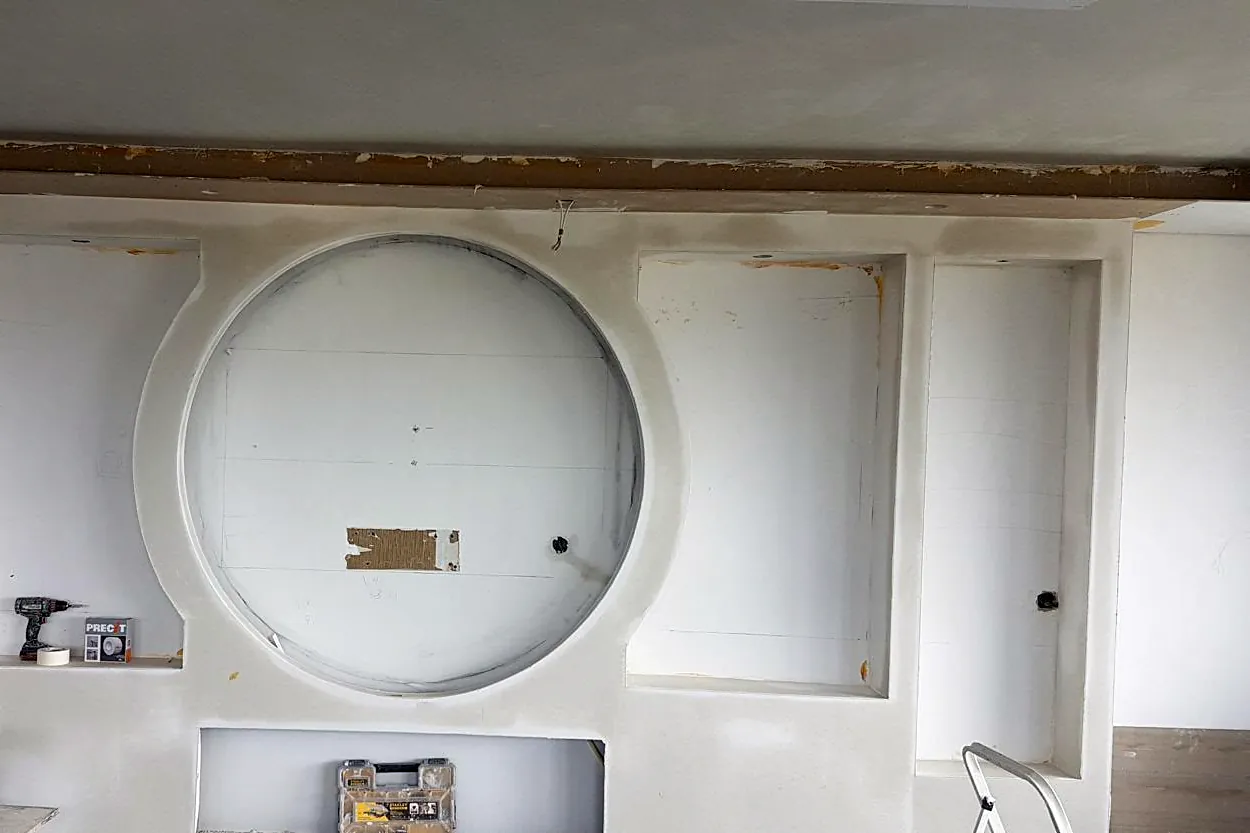
- Plasterboard: boards on a wooden or metal frame. This creates a new ceiling, a stud wall, a recess or a boxing-in. The joints are then finished.
When do you choose what?
- Plastering when the wall or ceiling is solid and just needs smoothing: filler, old paint, minor cracks. See plastering walls and plastering ceilings.
- Plasterboard if the old ceiling sounds hollow or sags (for example an old reed ceiling), if pipes or spotlights need to be concealed, or if you want a new wall or boxing.
- Both if you want a new surface that looks as smooth as plastering: install plasterboard and then finish the joints or skim.
Finish plasterboard
With plasterboard there are joints and screw holes between and in the boards. These are filled and reinforced. For wallpaper that's often enough; for a ready-for-painting finish the entire board is skimmed thinly, so there's no longer any visible difference between joint and board. See also ready for painting or ready for wallpapering.
Plasterer near you
Plasterboard and plastering together
Frequently Asked Questions
Is plasterboard faster than plastering?
A new plasterboard surface is fitted dry, but the joints still need to be finished. With a solid substrate, plastering is usually the quicker route.
Can a reed ceiling stay under plasterboard?
Often yes, if it can no longer come down. The new ceiling is then fixed to the joists, not to the reed.
Can plasterboard also be plastered?
Yes. After finishing the joints, a thin plaster layer goes over the entire board.
Do you also do stud walls and boxing-in?
Yes, together with the plastering. Tell us what you want done; you will receive a tailored quote.
How do I request a quote?
Call, send a WhatsApp message with photos and measurements, or fill in the form on this page. You'll hear the price before we start.