Finding leaks in your home 9 places where a leak hides
A damp patch is rarely directly below the leak: water runs along pipes, beams and joints before it becomes visible. Therefore start with the usual suspects.
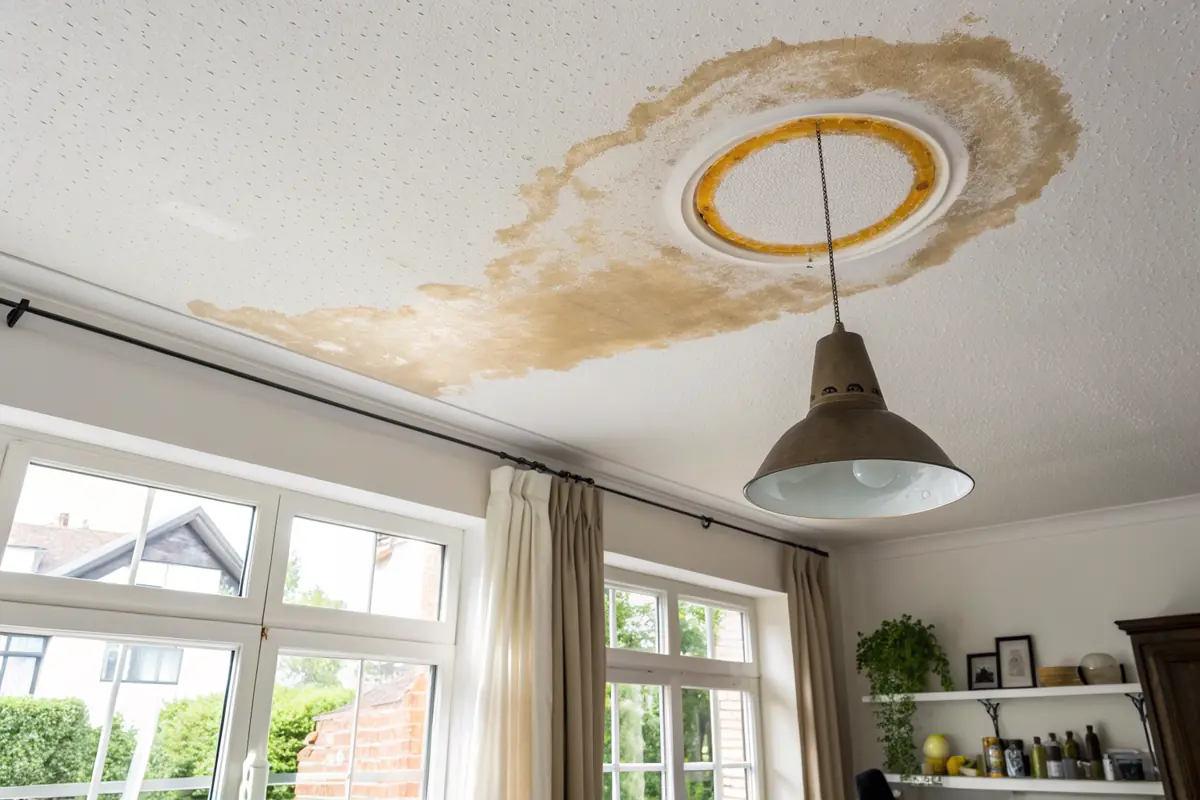
This is where the leak usually is
From top to bottom through the house.
Shower and bath
Cracked sealant joints and grout allow water to run behind the tiles with every shower. Sign: a patch on the ceiling below that grows larger after showering.
Drain under bath or shower
A loose or leaking drain only leaks when water flows through it. Signal: moisture that comes and goes with use.
The toilet
A leaking connection or a continuously running cistern. Signal: moisture around the base or a water meter that keeps running.
Kitchen cupboard
Trap, tap connections and the close-in water heater are out of sight. Sign: a bulging or soft cupboard base.
Dishwasher and washing machine
Hoses and connections age. Sign: moisture in the floor in front of it or in the room below.
Central heating system
If the central heating boiler needs constant topping up, water is leaking somewhere from the heating system, sometimes in a pipe under the floor.
Pipes in the floor
Water pipes and underfloor heating in the screed leak invisibly. Sign: a warm or wet spot in the floor, or tiles coming loose.
Roof and gutter
A leaking gutter or roof penetration causes damp that appears mainly after rain, often near an external wall or the ceiling of the top floor.
Frames and façade
Rainwater penetrates through joints at window frames or cracks in the façade. Sign: moisture around a window, especially with rain from one direction.
Tracing a leak at a window frame
A leak at a window or door is tricky, because the water often comes in quite a bit further away than where you see it. These are the signs:
- a wet or dark patch in the reveal (the wall next to or above the window), especially after rain;
- flaking paint, loose plaster edges or mould around the frame;
- a windowsill that is wet whilst the window was closed;
- soft or discoloured wood at the bottom of the frame (early wood rot).
First: is it condensation or a leak? Condensation forms indoors, on cold windows and especially in the morning or after showering and cooking. It also happens in dry weather. If the moisture only appears when it rains, and especially with wind from one direction, then water is penetrating from outside.
The common causes: a dried-out or cracked sealant joint between frame and wall, a drip moulding or sill whose drainage is blocked, a crack in the window sill or the masonry beneath it, or a damaged connection at the roof or cladding above.
Test yourself with the garden hose: have someone watch inside and spray water gently on the frame outside. Start at the bottom and work upwards in steps of a few minutes. This way you find the spot where the water enters. Don't spray with a hard jet and not directly upwards under the drip edge: then you push water inside that wouldn't come in with normal rain.
When to call for help? If the spot stays wet, you see wood rot or the moisture spreads to the ceiling of the floor below, don't wait. With thermal imaging leak detection, we follow the route of the water through the wall. This way we fix the real cause and there's no unnecessary breaking open.
Check yourself first
Do the water meter leak test. If the meter runs while everything is turned off, a pressurised water pipe is leaking. If the meter is still but the patch grows after showering, rain or running the dishwasher, the leak is in a drain, sealant seam or in the outer shell. That information helps us find the leak faster.
A damp patch on the ceiling also has other causes, such as condensation. Read about this in Damp patch on the ceiling: the causes.
Good to know
Short answers to questions we're often asked.
Water follows pipes, beams and joints before it becomes visible. The spot may therefore be some distance from the source.
If the patch is getting bigger, if the water meter keeps running whilst everything is turned off, or if you cannot find the source. The sooner, the more limited the damage.
Turn off the mains stopcock, switch off the electricity if water is near sockets, and catch the water. Then call 070 783 0224.
Useful to know
More about leaks and leak detection.
Hidden leak? We'll track it down.
Without unnecessary breaking and demolition work, with a fixed price agreement in advance. Available 24/7 for emergencies.
Need immediate help? Our technicians in The Hague and surrounding areas can assist you with leak detection — call 070 783 0224.