Ceiling leak what you do now and how we find the source
Is it dripping through the ceiling? If in doubt, turn off the mains stopcock and call 070 783 0224.
Rated on Google · Price in advance · Guarantee on the work
Water through the ceiling almost always comes from one of three places: the bathroom or kitchen above, a pipe in the floor, or the roof. So the first question is: what is above this spot? The second: does it leak all the time, or only when someone showers or when it rains?
Short answer: ceiling leak, what to do?
Put down a bucket, turn off the electricity if water reaches a light fitting and turn off the mains stopcock if it keeps dripping while no one is using water. If it only leaks during showering, it's often in the sealant work, grout or the drain of the bathroom above. If it only leaks when it rains, the roof or gutter is the cause. A leak inspection costs €220 excl. VAT (€266.20 incl.).
- Always wet: probably a water pipe or central heating pipe
- Only when showering or bathing: bathroom above
- Only when it rains: roof, gutter or façade
Call me back
Leave your name and number and we'll call you. Prefer immediate contact? Call 070 783 0224 or message us.
What to do in case of a leak through the ceiling
- Catch and clear. Bucket underneath, belongings away, keep floor dry.
- Power off at lights. Is water coming from a light, spotlight or smoke detector? Switch off that circuit in the fuse box.
- Close the mains stopcock if it keeps running. If the dripping stops afterwards, it's almost certainly a water pipe. Where that tap is located, you can read on mains stopcock and outside tap.
- Call upstairs neighbours or landlord. Does someone live above you? Ask if they see a leak and if they can avoid using water for a moment.
- Do not pierce a bulging ceiling without knowing what is behind it. A bulging plasterboard ceiling can suddenly give way. Do not stand underneath it.
- Take photos. Of the stain, the drip and the time. Useful for us and for the insurer.
Where is the water coming from?
- Bathroom above (most common): worn sealant edges around shower or bath, cracked grout, a leaking shower drain or a trap that leaks. Typical: it only leaks when someone showers, sometimes only an hour later. See also shower leak.
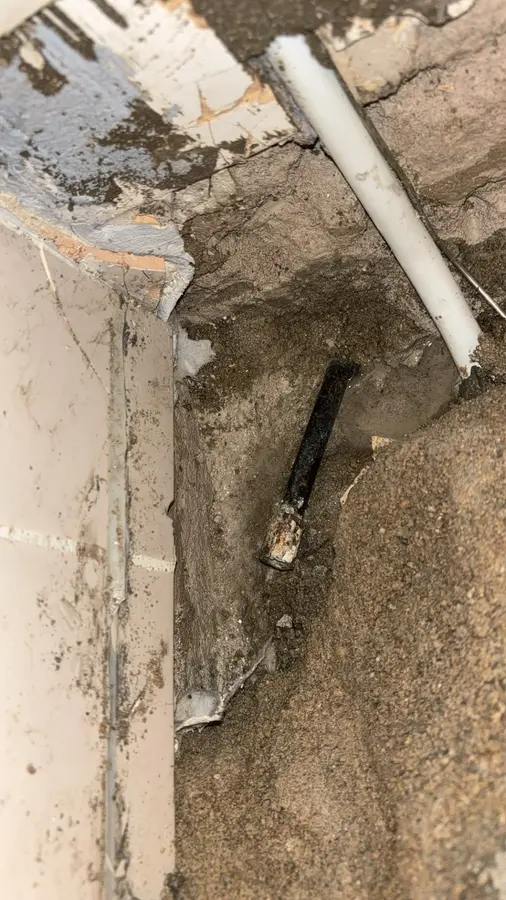
- Water pipe in the floor: a leaking coupling or a pipe with a hole. Typical: it stays wet, even when no one is using water. You can test this yourself with the water meter (water meter leak test).
- Central heating pipe or underfloor heating: the ceiling is damp and the boiler pressure keeps dropping. Then the leak is in the heating system.
- Washing machine or dishwasher above: a loose drain hose or leaking tap. Only leaks during washing.
- Roof or gutter: only when it rains, often near the outside wall or below the top floor. See roof leak.
- Condensation: black spots and moisture in a bathroom ceiling without drips. That's ventilation, not a leak.
Read more about the causes of a damp patch (even without drips) in damp patch on the ceiling: 6 causes.
How we find the leak without unnecessary breaking
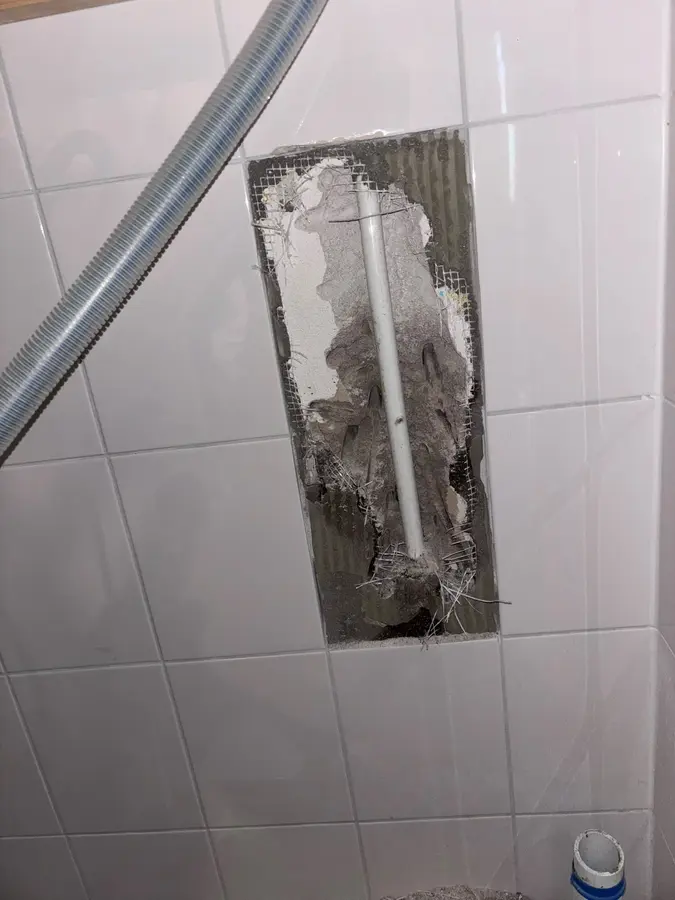
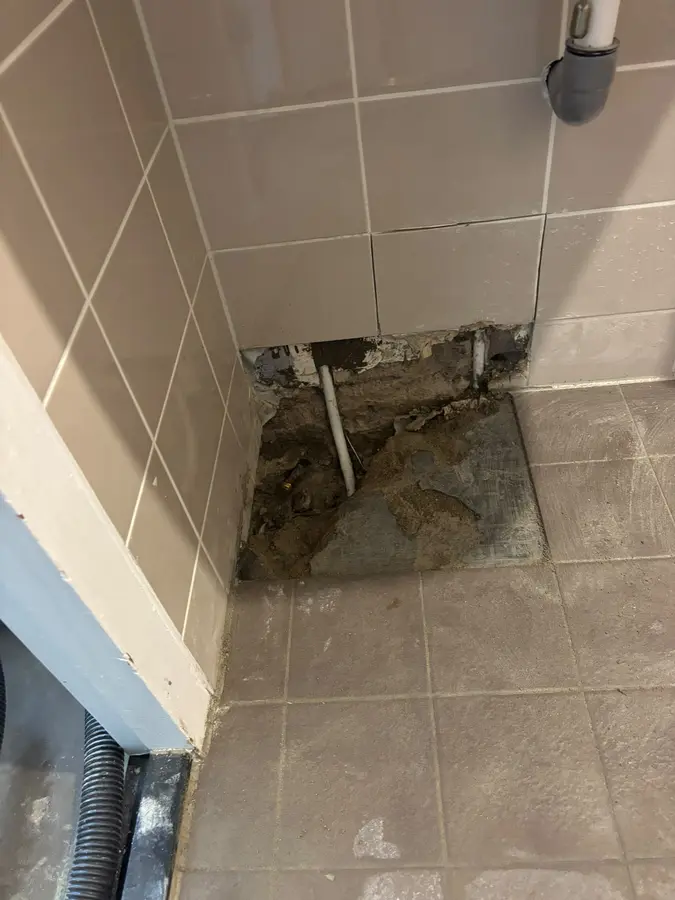
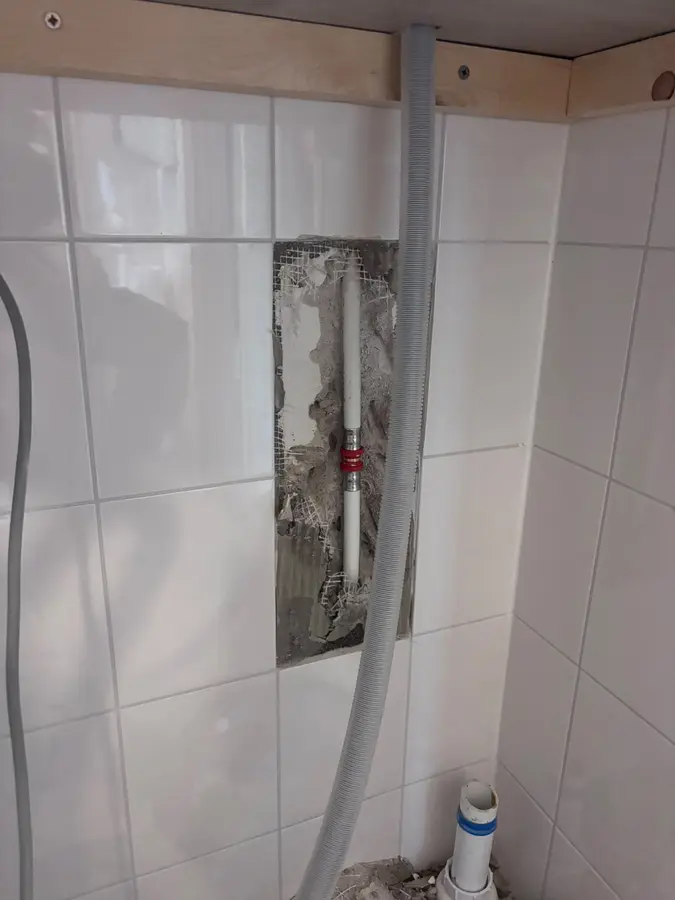
We start by measuring: moisture in the ceiling and walls, water pressure and boiler pressure. Often we already know where it is after that. If the source isn't visible, we use leak detection: a thermal imaging camera, a moisture meter, or for pipes tracer gas or acoustic measurement. That way only the right spot needs to be opened up.
After the repair, the ceiling needs to dry. For a plastered ceiling this usually takes several weeks. Only paint when it's completely dry, otherwise the stain will return. A ceiling that's bulging or coming loose must be replaced; we can give you a separate quote for that if required.
Rental property, flat and insurance
- Rental property: report the leak to your landlord or housing association immediately. Repair of pipes, roof and bathroom is usually their responsibility. In an emergency you may stop the water; then discuss who arranges the repair.
- Flat with owners' association (VvE): if it's leaking from the upstairs neighbours' property, their insurer is usually responsible. Pipes and roofs that belong to the building often fall under the VvE.
- Insurance: damage to your ceiling from suddenly escaping water is often covered, tracing sometimes too. Fixing the leak itself usually not. This varies by policy. A leak detection report helps with the claim (leak detection report and insurance).
What does it cost to have a leak through the ceiling repaired?
| Item | Excl. VAT | Incl. 21% VAT |
|---|---|---|
| Leak inspection (moisture measurement, source tracing) | € 220 | € 266,20 |
| Leak detection including report (source not visible) | € 350 | € 423,50 |
| Breaking work on bulkhead for leak detection | € 200 | € 242 |
| Repairing a burst water pipe | € 85 | € 102,85 |
| Written technical assessment report | € 60 | € 72,60 |
Guide prices from the PandFix price list (October 2026). Call-out charge is additional: €35 excl. VAT (€42.35 incl.), emergency €65 excl. VAT (€78.65 incl.). Evening or weekend: surcharge €80 excl. VAT (€96.80 incl.). Materials and extra hours only by agreement. You will always hear the price before we start.
Questions about leaks through the ceiling
What should I do first when water comes through the ceiling?
Catch the water, turn off the electricity if it's coming through a light fitting, and turn off the mains stopcock if it keeps dripping whilst no one is using water. Then call us or your landlord.
How do I know if it's coming from the bathroom above?
If it only leaks during or after showering, then almost certainly. Usually it's in the sealant joints, grout or the shower drain.
What does a ceiling leak cost?
A leak inspection costs €220 excl. VAT (€266.20 incl.). If leak detection with report is needed, then €350 excl. VAT (€423.50 incl.). You will hear the repair cost in advance.
I rent. Who pays for the leak?
Usually the landlord, because pipes, roof and bathroom are their responsibility. Report it immediately. Damage to your own belongings falls under your contents insurance, depending on the policy.
Does the ceiling need to come out?
Not if it's solid after drying. A ceiling that's bulging or coming loose does need to be replaced.
How long does it take for a wet ceiling to dry?
Usually a few weeks, depending on how wet it is and how well the room is ventilated. Only paint when it is really dry.