Leak detection report for your insurer what does it contain?
In the event of water damage, insurers often ask where the leak was and what caused it. A leak detection report provides black-and-white answers. What's included, and who pays what?
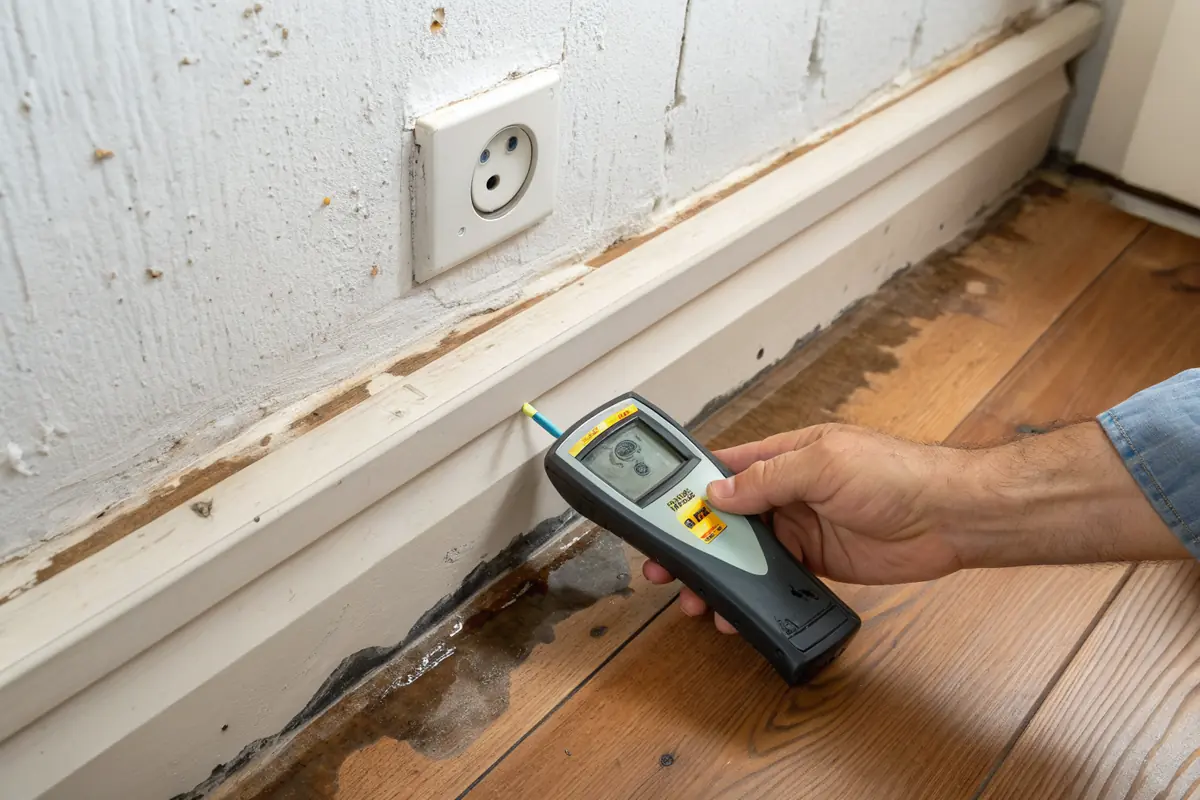
What's in a leak detection report?
On request, we provide a clear findings report.
The report
Address, date and what you see: a damp patch, drips, a high water bill.
The measurements
Which methods were used and what they showed, such as moisture values and thermal images.
The location of the leak
Where the leak is located, with photos and, where necessary, an indication on a sketch.
The cause
What is leaking and why: a pipe, a joint, a drain, a sealant seam.
The advice
What repair is needed, and what has already been done immediately, if anything.
Who pays the detection costs?
That depends on your policy and who owns the property. Always check your policy terms; these are the usual guidelines:
- Owner: many buildings insurance policies cover the costs of locating a leak and the breaking and repair work required for this. The repair of the pipe itself is often NOT covered.
- Damage to your belongings usually falls under contents insurance.
- Tenant: report it to your landlord first. Pipes and the building are usually the landlord's responsibility.
- Flat with VvE: if it concerns communal pipes or the façade, it often goes through the buildings insurance of the owners' association (VvE).
Not sure? Ask your insurer before the leak detection whether a report is needed and what should be in it. We'll then take that into account during the inspection.
Read more about reimbursements in Water damage and your insurance.
Preparing your damage claim properly: what to do before and after leak detection
A clear report helps, but the insurer also looks at what you have done yourself. The better you document everything, the smoother the claim usually goes. Use this list as a guide.
Immediately after discovering the leak
- Limit the damage. Turn off the mains stopcock, put down buckets and move belongings away. Insurers expect you to prevent things getting worse.
- Take photos and videos of the damage before you start clearing up. Also photograph the water meter.
- Don't throw away damaged items immediately. The insurer or an expert sometimes still wants to see them.
- Report the damage to your insurer as soon as possible. If you rent, also notify your landlord immediately. If you live in a flat, inform the owners' association (VvE).
Before the leak detection
- Ask the insurer whether they will send their own expert or whether you may engage a company yourself.
- Ask whether a report is needed and what must be included as a minimum.
- Do not start breaking or chiselling before this has been agreed. That can make the claim process more difficult.
- Note when you first saw the damage and what has changed since then.
After leak detection
Send the report with your photos to the insurer. Keep all invoices and receipts separately: for the leak detection, the breaking-through and repair work, the pipe repair and, if applicable, the drying of walls and floors. Insurers often distinguish between these costs. With separate items, you and the insurer can see more quickly what is and isn't covered.
Watch out for new damage
Does the damage worsen after the investigation, for example because a ceiling sags or mould develops? Document this again and report it to the insurer. Allow wet floors and walls to dry thoroughly before applying new finishes. Otherwise the moisture will return later. Want to know how we help with water damage, from detection to repair? Read the water damage page.
Good to know
Short answers to questions we're often asked.
On request, we provide a clear findings report that you can share with your insurer. Let us know when making the appointment.
That depends on your policy. Many buildings insurance policies cover detection costs, but always check your terms or ask your insurer.
Report a leak to your landlord first. Pipes and the building structure are usually the landlord's responsibility.
Useful to know
More about leaks and leak detection.
Hidden leak? We'll track it down.
Without unnecessary breaking and demolition work, with a fixed price agreement in advance. Available 24/7 for emergencies.
Need immediate help? Our technicians in The Hague and surrounding areas can assist you with leak detection — call 070 783 0224.