Bleed underfloor heating or is it not getting warm?
Underfloor heating is comfortable, but if part of the floor stays cold, it's difficult to see what's wrong. After all, the pipes are in the floor. Often the cause is air, dirt or an incorrect setting at the manifold. Here you can read how underfloor heating works, how bleeding and flushing work in broad terms, and when it's better to have a tradesman take a look.
How underfloor heating works
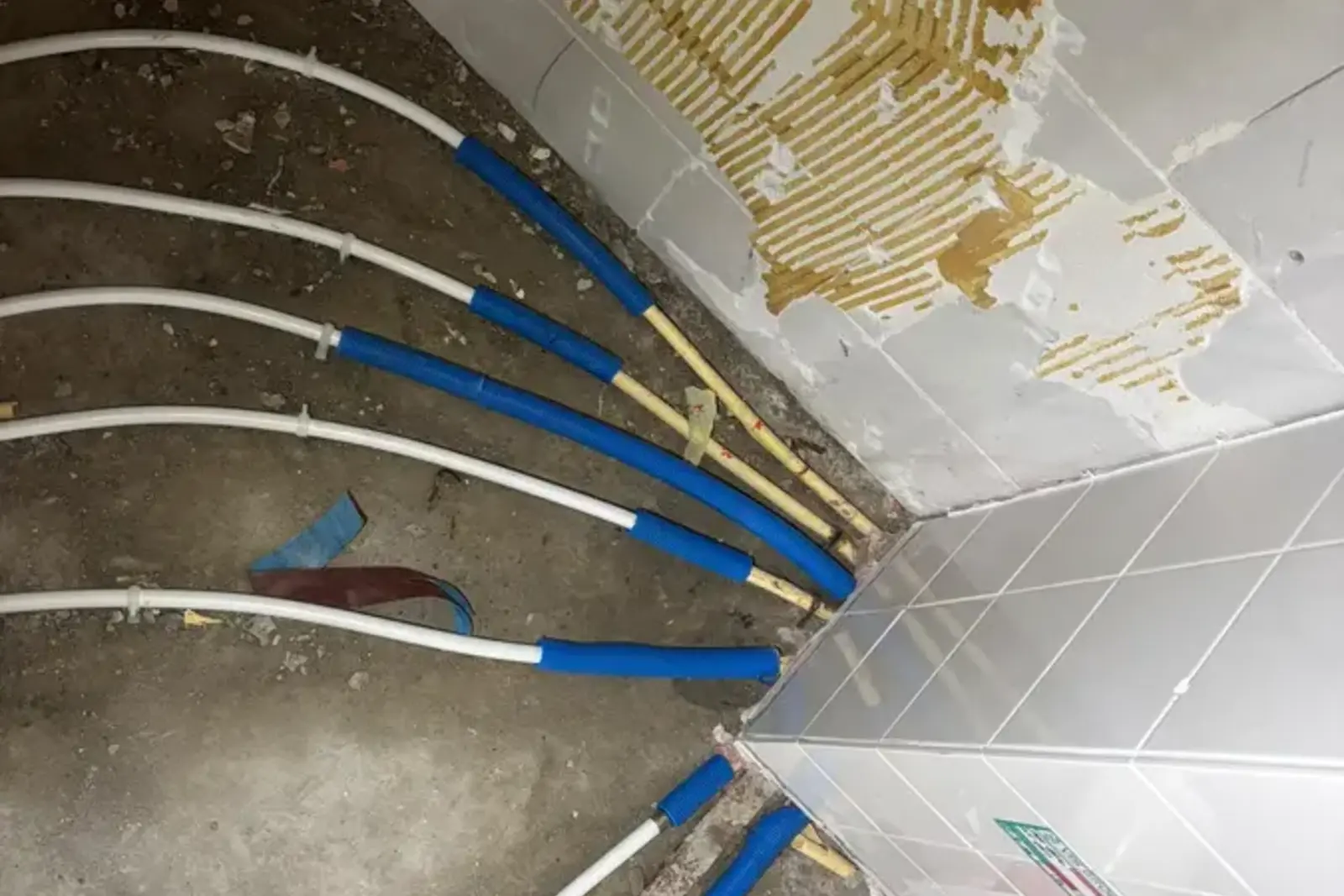
With wet underfloor heating, warm water runs through plastic pipes in the screed. These pipes are divided into circuits: usually one or more loops per room. All circuits come together at the manifold, a box or rack with two horizontal pipes (flow and return) and a valve or flow meter for each circuit. Many installations also have a pump and a control that lowers the water temperature, because underfloor heating works with lower temperature water than radiators.
Underfloor heating responds slowly. A floor needs hours to reach temperature. That's normal and not a fault.
Signs that something is wrong
- One room or part of the floor stays cold, whilst the rest gets warm.
- You hear gurgling or rushing at the manifold.
- The electricity meter for a circuit is at zero or not moving.
- The floor no longer gets properly warm anywhere, or only after a very long time.
- The boiler pressure keeps dropping. This may indicate a leak; then read about underfloor heating leaks.
Bleeding underfloor heating
Air in the pipes usually collects at the manifold. There are bleed valves there: small nipples or automatic bleed valves at the top of the flow and return pipe. Broadly speaking, it works like this:
- Switch off the underfloor heating pump and the heating and wait a moment, so the air can rise to the top.
- Keep a cloth and a bowl ready under the bleed valve of the manifold.
- Open the bleed valve carefully with a radiator key or screwdriver and let the air escape until water comes out without bubbles. Close it again.
- Check the central heating pressure on the boiler and top up if necessary, just as you would after bleeding a radiator.
- Turn everything back on and give the floor time to warm up.
If one loop stays cold, the air may be trapped in the loop itself. You won't always get it out via the bleed valve; the loop may need to be flushed through. Don't adjust the flow meters or balancing valves without good reason: they were set during installation so that each room receives the correct amount of water. Note the position if you do touch them.
Flushing underfloor heating: when is that necessary?
In older underfloor heating, especially with pipes without an oxygen-tight layer, sludge and sediment can form over the years. The water then flows less well through the loops and the floor becomes less warm. Air that won't come out can also be a reason to flush. When flushing, each group is flushed separately with water, and sometimes with air or a cleaning agent, until the water runs clear. This requires connections on the manifold and the right equipment. It's work for a tradesman, especially if a cleaning agent is involved.
Flushing isn't always the solution. If one room stays cold, it could also be the controls or the pump. So first have the cause established.
Underfloor heating not getting warm: other causes
- Central heating pressure too low. Check the pressure on the boiler.
- The pump isn't running. Feel whether the pump at the manifold is humming or vibrating slightly. If it's off, check the plug and the switch.
- The mixing control or thermostatic head is set too low, or is stuck.
- The room thermostat or the control per room is not controlling the zone, for example due to a flat battery or a faulty valve.
- The boiler isn't producing hot water. If the radiators aren't getting warm either, the problem is with the boiler. See boiler breakdown.
- The installation is not properly balanced or something has changed in the layout of the rooms.
What you'd better not do
- Opening the flow meters fully to make a cold room warmer. Then other rooms get too little.
- Drilling holes yourself in a floor with underfloor heating, for example for a door stop. A hit pipe causes a leak under the floor.
- Keep topping up when the pressure keeps dropping. Then there's a leak that needs to be traced.
When should you call us?
- A circuit or room stays cold, even after bleeding and checking pressure and pump.
- The central heating pressure keeps dropping, or you see moisture or a wet patch on the floor.
- The manifold is leaking or a bleed valve keeps dripping.
- You're unsure whether the underfloor heating needs to be flushed.
Call PandFix on 070 783 0224. For emergencies we're available 24/7; more about emergencies.
Related services
Need help? View the related service or call us directly.
Central Heating Boiler & Breakdown
Breakdown, leak or maintenance on your boiler? We identify the cause and discuss the cost with you beforehand.
More infoLeak Detection
Damp or a patch on the ceiling? We trace the source without unnecessary demolition.
More infoLeak
Stop the water, find the source and repair: one team, fixed price agreed beforehand.
More infoUnderfloor heating inspection or flushing: costs and approach
If one zone doesn't heat up whilst the rest do, there is often air or dirt in that zone, or a thermostatic valve or balancing valve is stuck. If an entire floor heats poorly, we first check the pump, the settings and the flow temperature. Only then is flushing considered.
When flushing, we push clean water through the pipes loop by loop, so that sludge and dirt come out. Afterwards we bleed, top up the system and rebalance the loops. If water is leaking somewhere, read more in underfloor heating leak.
Send a photo of the manifold and tell us how many circuits there are. Then we can give a good estimate in advance.
Good to know
Short answers to questions we're often asked.
You can often release air yourself via the bleed valve on the manifold, with the pump off and a cloth underneath. If the air is trapped in a loop itself, that won't help and the zone must be flushed through.
There is no fixed interval for that. It depends on the pipes, the age and whether there is sludge in the system. Only when the floor heats less well and other causes have been ruled out is flushing an option.
Underfloor heating works with lower temperature water and has to heat an entire floor. A few hours is normal. If the floor doesn't get warm even after a long time, there may be air, dirt or a control problem.
Often the group for that room has been closed off, incorrectly balanced, has air in it or the thermostat is not controlling it. Check at the manifold whether the flow meter for that group is moving.
That depends on the number of zones and the condition of the installation. For inspection and minor heating repairs we quote a guide price of €90 to €175; flushing receives a fixed price in advance.
Often there is air or dirt in that circuit, or the valve on the manifold is stuck. Bleeding or loosening the valve usually helps; otherwise we flush that circuit through.
Need help in The Hague or the Randstad?
Feel free to call us for advice or an appointment. In emergencies we're available 24/7.