Relining repairing a sewer break without excavation
Broken sewer under the floor, patio or driveway? Often it can be done from the inside. Call 070 783 0224 or send a photo.
Rated on Google · Price in advance · Guarantee on the work
With relining, the old sewer pipe gets a new inner wall. The pipe stays in place, the garden and floor remain intact. That sounds like the solution for every sewer break, but it isn't. On this page you can read how it works, when it is and when it isn't the best choice, and why we always inspect with a camera first.
Short answer
Relining is a way to repair a broken or leaking sewer pipe without digging: a resin-filled liner is inserted into the old pipe and cured there to form a new, seamless inner pipe. It works well for cracks, leaking joints and root ingress, but not for a pipe that has collapsed, is severely misaligned or is missing. Whether relining is possible for you can only be determined after a camera inspection.
- Suitable for: cracks, leaking joints, roots, porous old pipe.
- Less suitable: subsided pipe with a dip, severely displaced section, collapsed pipe.
- Price: tailored, after the camera inspection (€225 excl. VAT (€272.25 incl.)).
Call me back
Leave your name and number and we'll call you. Prefer immediate contact? Call 070 783 0224 or message us.
Relining in plain language
Think of it as a new inner tube in an old outer tyre. The old pipe serves as a mould; the new pipe is formed inside it.
- Cleaning. The pipe is cleaned first. Grease, scale and roots must come out, otherwise the new lining won't bond and bumps will remain. Roots are removed with a milling cutter.
- Inspect again. After cleaning, the camera goes through once more. Only now do you really see the condition of the pipe; a layer of dirt often hides cracks.
- Inserting the liner. A flexible liner made of felt or fibreglass is custom-made and filled with resin. It enters the pipe via a manhole or the rodding point. Often it is blown inside-out into the pipe using air or water pressure (called inversion), so that it sits tight against the old wall.
- Curing. The resin cures, depending on the system with hot water, steam or UV light. Afterwards the liner is a rigid, seamless pipe inside the old pipe.
- Opening connections and checking. If branch pipes connect to it, they are milled open again from the inside. Finally the camera goes through one last time, so you can see that everything is sealed and clear.
If there is only one bad spot in an otherwise good pipe, sometimes a short section (a so-called patch or short liner) will suffice instead of the entire length. We determine that based on the footage as well.
When is relining a good choice?
Relining is often a good fit for:
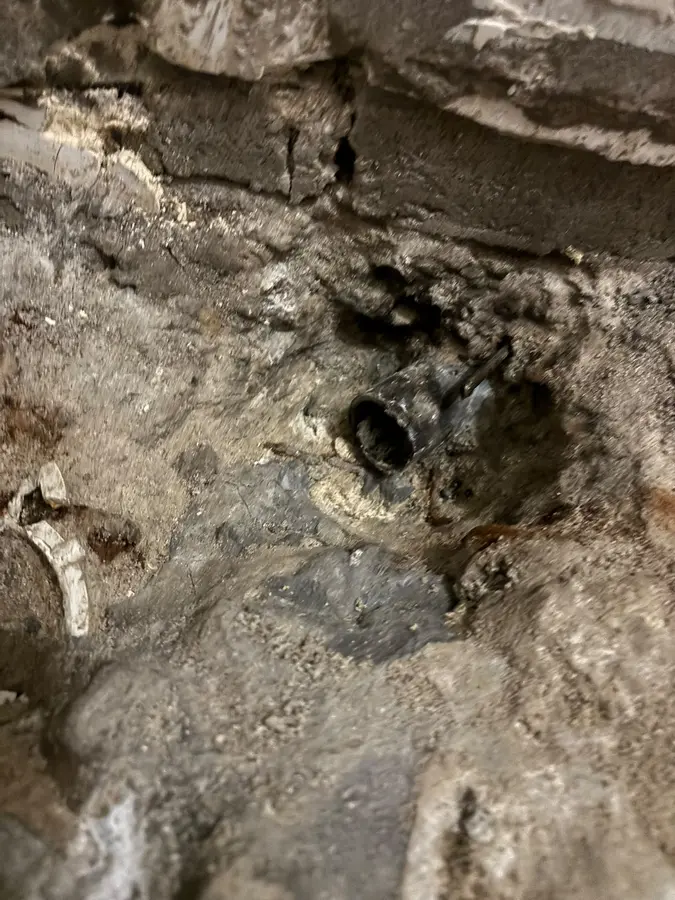
- hairline cracks and small fractures in a pipe that is otherwise still in place;
- leaking joints (sockets) where water leaks out or groundwater seeps in;
- roots growing in through the joints after being milled out;
- old stoneware or cast-iron pipes that have become porous or rough;
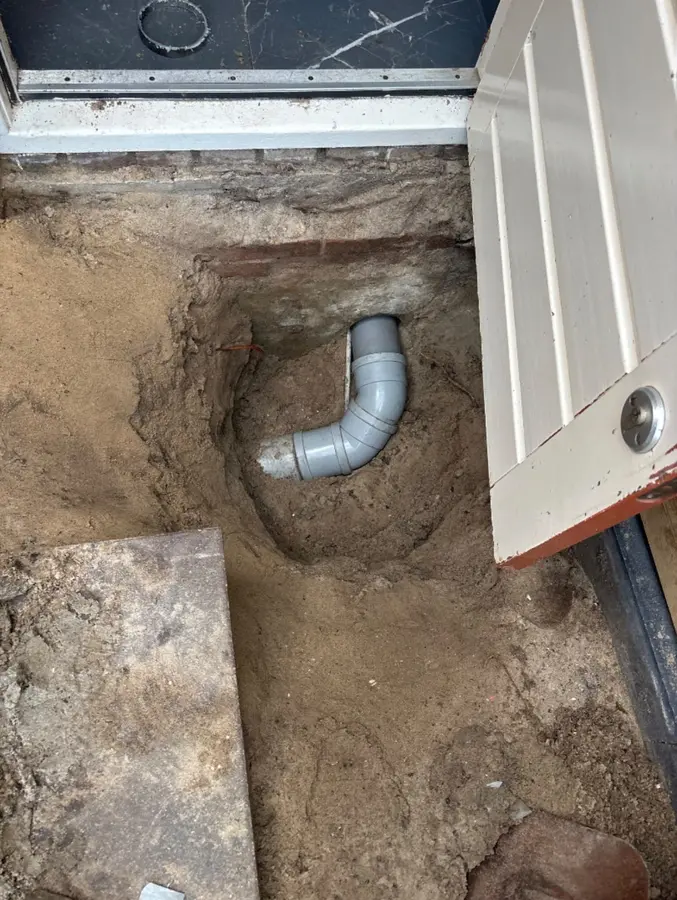
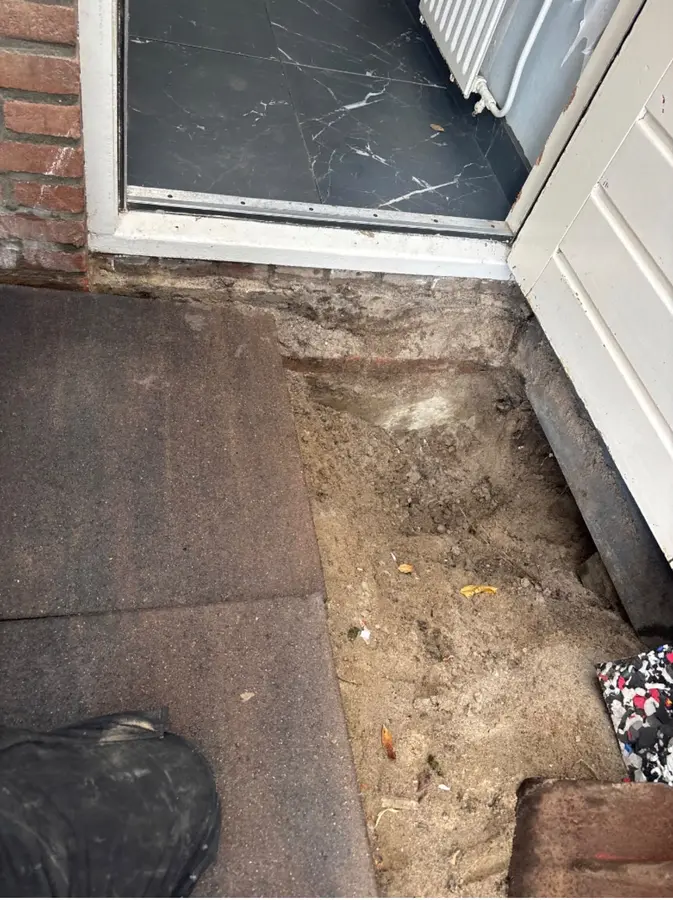
- pipes under an expensive floor, a landscaped garden, a driveway or an extension, where digging means a lot of reinstatement work.
Relining is usually NOT the solution for:
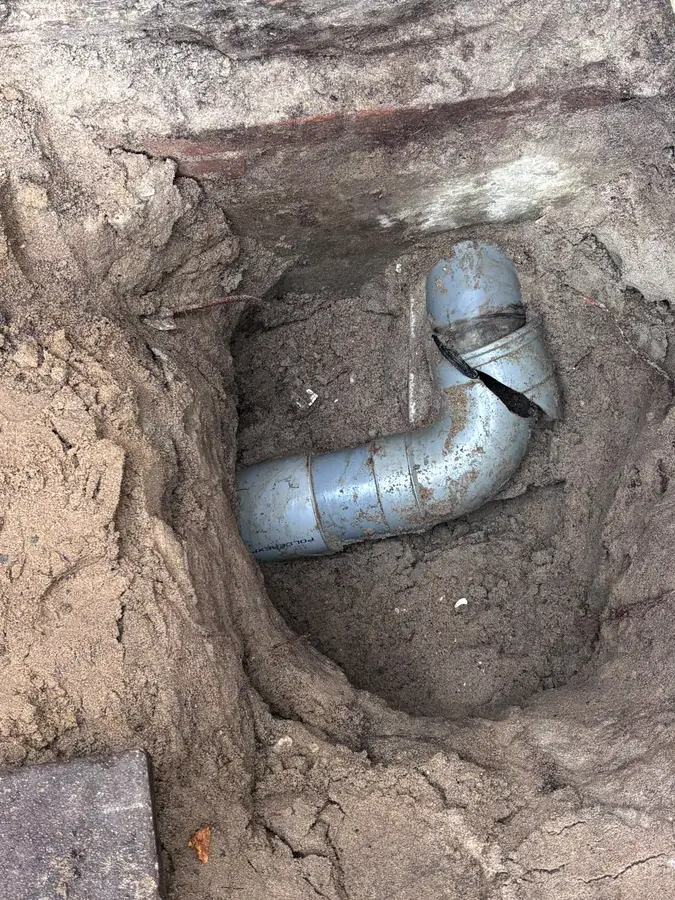
- a subsided pipe with a dip where water pools. The liner follows the shape of the old pipe, so the dip remains. Debris will continue to accumulate there;
- a severely shifted or dislodged section, where the pipe ends are no longer aligned;
- a pipe that has collapsed or where a section is missing, so there's no longer a mould;
- a pipe that's too small or incorrectly positioned: if you want to go from 50 to 110 mm, or the gradient needs improving, replacement is necessary.
An honest recommendation may therefore be: here it's better to excavate a short section. On our sewer replacement page you can read how that works. If you're unsure between the two, we'll set out the options side by side with the price included.
What you gain and what you give up
- Less disruption: no trench through the garden or floor where it can be avoided. Paving, tiles and plants remain in place.
- Speed: a short pipe is often completed in one working day, including cleaning and final inspection.
- Seamless: the new inner pipe no longer has sockets that roots can penetrate.
- Slightly smaller diameter: the liner wall takes up a few millimetres. In a normal domestic connection you won't notice this in practice, but with an already tight pipe we factor this into our advice.
- No correction of the gradient: a pipe that drains incorrectly will continue to drain incorrectly.
Relining is neither a cheap alternative to replacement nor a more expensive one: it depends on the length, diameter, number of bends and connections, and how much repair work digging would cost. That's why we don't quote a fixed price upfront, but give you a price based on the camera footage.
What does relining cost?
The price of relining itself is quoted after the inspection, tailored to your pipe. The preparatory steps are fixed in our price list.
| Item | Excl. VAT | Incl. 21% VAT |
|---|---|---|
| Camera inspection of sewer drain (footage + location of damage) | € 225 | € 272,25 |
| Mechanically clean sewer | € 130 | € 157,30 |
| Smoke test of sewerage, including report (for air without visible cause) | € 185,95 – € 268,60 | € 225 – € 325,01 |
| Relining of the pipe itself | tailored price after the camera inspection | same, always in advance |
Guide prices from the PandFix price list (October 2026). Call-out charge is additional: €35 excl. VAT (€42.35 incl.), emergency €65 excl. VAT (€78.65 incl.). Evening or weekend: surcharge €80 excl. VAT (€96.80 incl.). Materials and extra hours only by agreement. You will always hear the price before we start.
If the footage shows that digging is wiser, you'll receive a price for that. Those items, such as installing a section of 110 mm PVC or breaking and excavation work, are on our page locate and repair sewer break.
Tenant, owners' association (VvE) or municipality?
If the broken pipe is on your own property, the owner pays for the repair. If you rent, report it to the landlord. In an apartment building, a shared pipe usually belongs to the owners' association (VvE). If the break is in the municipality's section, you or a plumber may not work on it yourself; report it to the municipality. The exact boundary varies by municipality. See sewer break: who pays? or check with your municipality, for example The Hague, Delft or Wassenaar.
The camera footage and report you receive from us can be used for the landlord, the VvE, the municipality or your insurer.
Questions about relining
What exactly is relining?
Relining is repairing a sewer pipe from the inside. A resin-filled sleeve is inserted into the old pipe, pressed against the wall and cured there. This creates a new, seamless pipe inside the old one, without the need for excavation.
Can relining be used for every sewer break?
No. With a subsided pipe with a dip, a badly shifted section or a collapsed pipe, it doesn't work well. Then replacing a short section is better. After the camera inspection you'll hear which option suits your pipe.
How long does a relined pipe last?
That depends on the system and circumstances. Manufacturers reckon on decades. What's important is that the pipe is properly cleaned beforehand and that there's no subsidence; that's why we inspect with the camera before and after.
Do I need to be home and can I use the toilet during the work?
During cleaning, insertion and curing, no water can flow through the pipe for a while. This usually takes a few hours. We agree in advance when you won't be able to discharge water.
What does relining cost?
We price the relining itself on a tailored basis after the camera inspection, because length, diameter, bends and connections make a big difference. The inspection costs €225 excl. VAT (€272.25 incl.) according to our tariff list, plus call-out charges.
Does insurance cover relining?
The repair of the pipe itself usually not, the damage caused by a leaking sewer sometimes yes. That differs per policy. The camera report helps with the assessment.